
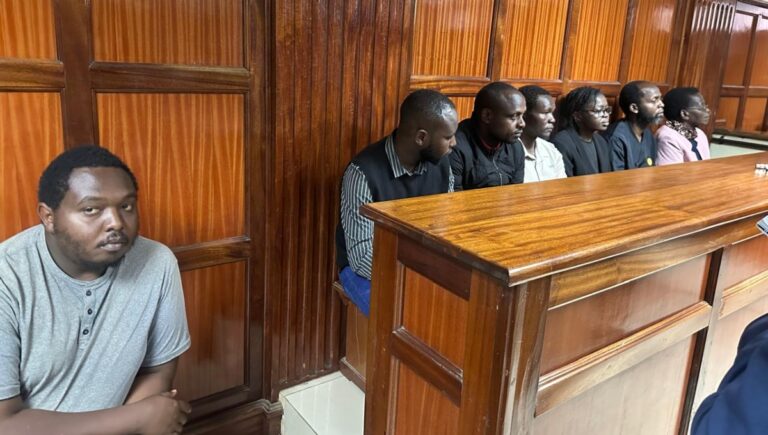
The husband of the late Dr. Victoria Mutiso has urged the court to deny bail to the seven people charged with her murder, arguing that their release could place him, his family and prosecution witnesses at risk of intimidation and interference.
In an affidavit filed before the court, David Ndetei said he was directly affected by the case and claimed that he had received threats from some of the accused before his wife’s death.
Ndetei disclosed that he was previously married to the first accused, Rose Mbithe Mulwa, and that their union produced two children, Chris and Angela Mulwa, who are also among those facing murder charges.
He said their marriage ended in 2001. A subsequent dispute over property, he added, resulted in a High Court decision against Mulwa. According to Ndetei, she did not accept the ruling and did not appeal it, leaving what he described as a longstanding grievance.
Ndetei later married Dr. Mutiso and alleged that the couple was subjected to persistent threats by the accused persons.
“I confirm that we were constantly threatened by the Accused persons and those threats eventually culminated into my wife’s death,” he stated in the affidavit.
He said the history of the dispute was relevant to understanding the background surrounding his wife’s alleged killing, while acknowledging that the actual circumstances of her death remain issues to be determined during the trial.
Ndetei further argued that the accused persons are familiar with his family, relatives, colleagues and friends, as well as members of the deceased’s family. He said they also know the homes and places regularly visited by people who could potentially testify in the case.
He expressed concern that witnesses, including relatives from both families, household and domestic workers, and people from their professional and social circles, could be contacted, influenced or intimidated if the accused were released.
According to Ndetei, such interference could be carried out through phone calls, text messages, personal visits or third parties acting on behalf of the accused.
He also described Mulwa as “an imperious individual” and alleged that she had repeatedly threatened him. Ndetei said he feared that the accused could intimidate, bribe or otherwise interfere with witnesses, while also posing a threat to him and his family.
He alleged that the ongoing court proceedings had also been accompanied by derogatory comments and outbursts directed at him, his late wife and other members of his family.
Particular concern was raised over the fourth accused, whom Ndetei identified as a serving police officer.
He claimed that the officer’s position could potentially provide access to police colleagues, official records, databases, telephone information, location data and other networks that could be used to identify, trace or intimidate witnesses.
Ndetei argued that standard bail conditions would not sufficiently protect against such risks, given that the accused officer works within the very system responsible for enforcing those conditions.
The widower also referred to the death of lawyer Kyalo Mbobu, whom he described as the family’s advocate.
According to Ndetei, he was informed by the investigating officer and the prosecution that Mulwa was being investigated in connection with Mbobu’s death.
He said Mbobu had represented him in legal matters and was familiar with the family’s affairs, including the property dispute involving Mulwa.
Ndetei was careful to state that he was not making any determination about the circumstances of Mbobu’s death, noting that the matter remained under investigation.
However, he argued that the lawyer’s death, together with the alleged investigation involving the first accused, heightened his concerns that the accused could commit another offence against witnesses or other individuals connected to the case if granted bail.
Ndetei acknowledged that the prosecution bears the burden of demonstrating compelling reasons for an accused person to be denied bail. Nevertheless, he maintained that the alleged risk of witness interference, concerns over the safety of victims and witnesses, and the possibility of further offences constituted compelling grounds for keeping the accused in custody.
He also relied on the Bail and Bond Policy Guidelines and the Victim Protection Act, submitting that the court should take into account the safety and views of victims and their families when determining whether to grant bail.
Ndetei ultimately asked the court to dismiss the seven accused persons’ bail application and order that they remain in custody until the murder case is heard and concluded.
APERIT FM, HII NI YETU