Kenya celebrates its 63rd Mashujaa Day in Eldoret amidst economic pressures, political tensions and food shortages and price increments including groceries like milk, kales, eggs, and potatoes. For months, Kenyans have had to scramble to get milk at supermarkets and when they do its at limited amounts and higher prices especially in Nairobi.
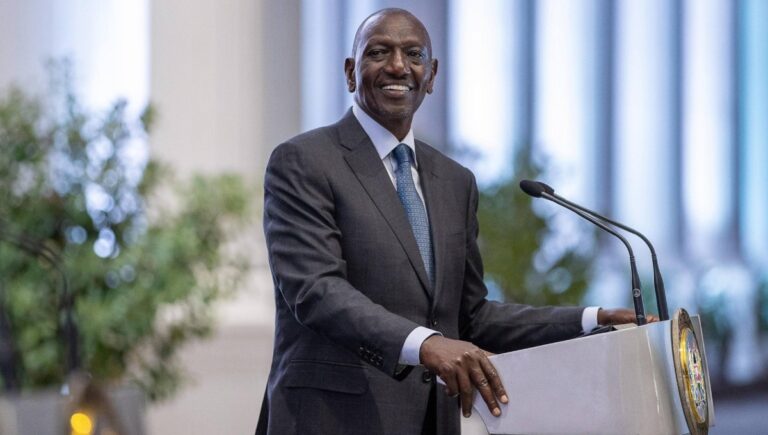
Speaking at the Mashujaa Day celebrations in the Kipyegon stadium, president Ruto remarked that agriculture had boomed in the country including the amount of milk production and what the dairy farmers get to earn currently and even next month after a new implementation.
President Ruto said, “In the dairy sector, natural milk production has increased by one billion litres while price paid to farmers has risen from KSh 35 to KSh 60 this month, nearly doubling their earnings per litre. Beginning this month, dairy farmers will earn KSh 65 per litre with a KSh 2 bonus per quarter.”
Additionally, Ruto mentioned that the current government had registered 8.9 million farmers, eliminated exploitative businessmen and cartels, and reduced the cost of farm inputs. He went on to point out that the government has distributed 38 million bags of subsidised fertilisers, maize production had increased while imports declined, coffee cherries and tea leaves prices per kilogram had increased, and that sugar farmers are now paid weekly and will be receiving a bonus from next month for delivery.
The Kenya Dairy Board had earlier acknowledged the shortage of milk basing it on supply constraints in some parts of the country due to dry weather. The Cabinet Secretary of Agriculture, Kagwe had also addressed the milk shortage in an interview claiming it was due to two main reasons which are drought and ‘monkey business’ done by some cooperatives.
CS Kagwe said, “There are two reasons why there is instability in the milk market at the moment. The first one is drought. You all know there is a shortage of rain in most of the dairy areas, which means there is shortage of animal feed in those areas. The second thing is the amount of money the cooperative societies are getting from the processors of milk is not taken directly to the farmers.”
According to Africa Uncensored panelists discussing the shortage of milk crisis, the amount of milk a Kenyan consumes per person annually is 120 litres. Making Kenya not only the highest in milk production but also milk consumption in Africa.
This is compared to Uganda where a person consumes 53 litres and in Tanzania a person comes 42 litres per person.
APERIT FM, HII NI YETU