
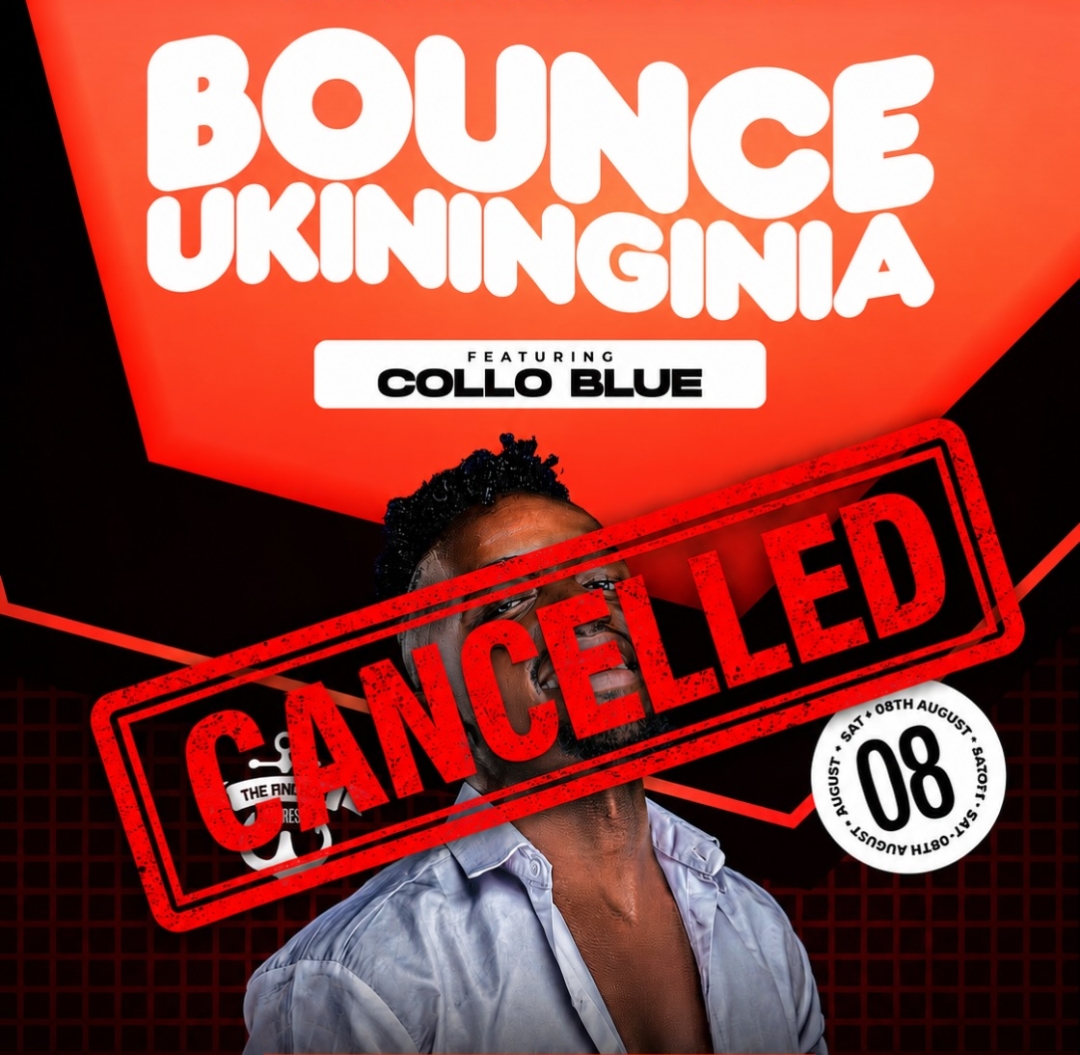
Kenyan dancer-turned-musician Collo Blue has cancelled a scheduled performance in Nairobi after a disagreement with the club promoter, leaving fans who had turned up for the show disappointed.
Collo Blue, who has successfully transitioned from dancing into music, was scheduled to perform at a Nairobi club but did not take the stage after what he described as a disagreement with the promoter.
The entertainer had already arrived at the venue as agreed, but according to his social media update, circumstances surrounding the engagement forced him to call off the performance.
In a video shared on his social media pages, Collo Blue appeared to seek an apology from his fans while showing that he was already at the venue.
The musician explained that he and his team had turned up for the booking despite allegedly not receiving a deposit for the show.
In his caption, Collo Blue wrote:
«“Poleni my guys but we had issues with the club promoter where we felt a little bit disrespected and hence couldn’t go on with the show as planned, will make it up to y’all soon.”»
The artist did not publicly disclose the exact disagreement with the promoter. He also did not clarify whether the booking was backed by a signed contract or was based on a verbal agreement.
The cancellation has once again highlighted some of the challenges Kenyan musicians and entertainers face when dealing with event promoters and club bookings.
Who Takes the Blame When an Artist Cancels a Show?
This is not the first time an artist has failed to perform as scheduled following disagreements with a promoter.
Entertainment bookings often involve several important details, including performance fees, deposits, performance time, technical requirements, transport, accommodation and other contractual obligations.
When either side fails to honour the agreed terms, misunderstandings can quickly escalate and ultimately affect the fans who have already made plans to attend the event.
If an artist has honoured their obligations but the promoter fails to meet agreed terms, responsibility may fall on the promoter. However, if an artist pulls out without a valid contractual reason after the promoter has fulfilled their obligations, the situation could be viewed differently.
The exact circumstances of Collo Blue’s case remain unclear, as neither the promoter nor the club has publicly provided its side of the story.
For artists and promoters, having clear written agreements, deposits and well-defined performance terms can help prevent such disputes and protect both parties.
Despite the cancellation, Collo Blue assured his fans that he intends to make it up to them soon.
The dancer-turned-musician has been steadily building his profile in Kenya’s entertainment industry, expanding from his successful dancing career into music.
Do you think Collo Blue was right to cancel the show, or should artists honour their performances regardless of disagreements with promoters? Who do you think takes the blame in such situations?
Keep it Aperit FM for this and more stories from the entertainment industry.